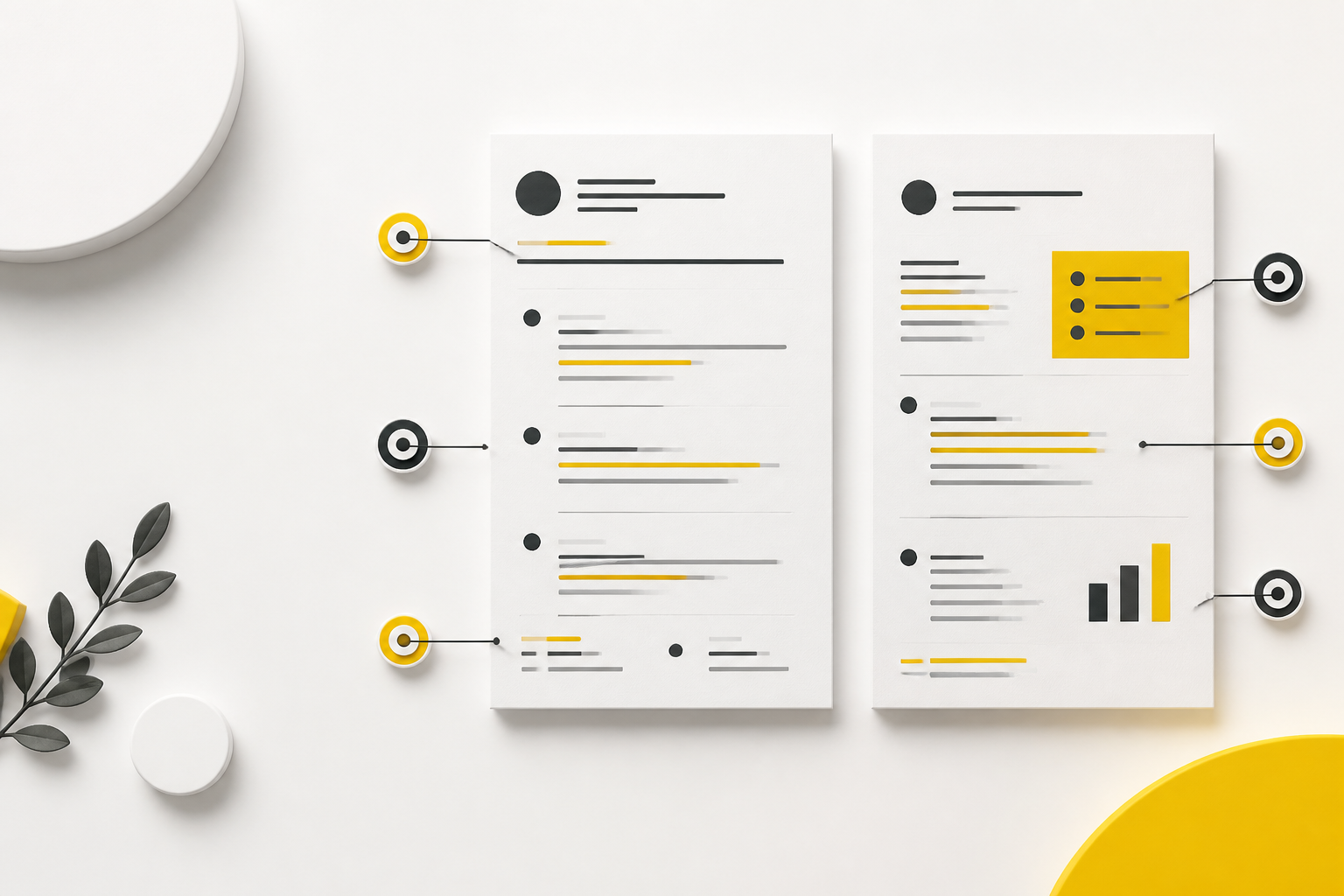
Example: the experienced professional
An experienced professional can open with their discipline and level, add a relevant operating context and then name a selected proof point. This works because it gives the reader a frame before the career detail begins.
Example: the consultant or specialist
A consultant profile can centre the expertise, type of client problem and the work that demonstrates authority. It should explain what the person is known for rather than simply state that they are a trusted advisor.
Example: the founder or leader
A founder profile can connect the business journey, professional background and point of view. The strongest versions make leadership credibility clear without turning the profile into a promotional company description.
Example: the career transition
A transition profile needs a clear new direction and a truthful bridge from previous experience. Select transferable evidence and explain the relevance rather than presenting the future role as if it were already held.
Use examples to identify your own evidence
Do not copy an example sentence because it sounds polished. Replace the role, audience, scope, examples and professional direction with your own factual information.
Check the profile against the intended audience
A board introduction, consultancy proposal and job application may all use related facts, but each requires a different emphasis and level of detail.
Example pattern: experienced professional
An experienced professional can name their discipline, the environment in which they have worked, a meaningful area of responsibility, and the kind of role they want next. For example, an operations professional could mention multi-site delivery, process improvement, team coordination, and interest in a larger transformation role. The details make the direction credible.
Example pattern: fresher
A fresher profile can connect education, practical projects, relevant tools, and a target entry role. It does not need to sound senior. A candidate seeking an analyst role may describe a data project, the method used, their comfort with structured problem solving, and interest in supporting commercial decisions.
Example pattern: career transition
A career changer should name the target direction and the transferable bridge. A teacher moving into learning design might refer to curriculum development, learner needs, digital content, and stakeholder communication. The objective is to make the next step understandable, not to hide the previous career.
How to adapt a personal profile example
Use the structure, then replace every detail with your own professional facts. Check that the experience section backs up each claim. If a sentence could appear on any CV, add a useful detail or remove it. The best profile is not the most polished sounding one. It is the one that tells the reader what to look for next.
Use the example as a checklist
After drafting, check whether your profile names a direction, gives a relevant foundation, includes one useful piece of scope or proof, and fits the opportunity you want. If one of these elements is missing, add the fact that will help a reader make sense of your experience. This is more valuable than trying to reproduce another applicant’s tone.
Frequently asked questions
Questions people ask before they write.
Can I use the same personal profile on my CV and website?
Use a master narrative, then adapt length, tone and evidence for the audience. A CV opening is usually much shorter than a website profile.
What makes a personal profile sound credible?
Specific professional context and verifiable evidence make it credible. Remove broad claims that cannot be supported by the document that follows.
Can I copy a personal profile example?
Use examples to understand structure, but write your own evidence. Copied wording often becomes vague or contradicts the rest of the CV.
Should I mention personal hobbies in a profile?
Only when they are genuinely relevant to the application or demonstrate a useful, verifiable context. Most profiles are stronger when they focus on professional direction.